


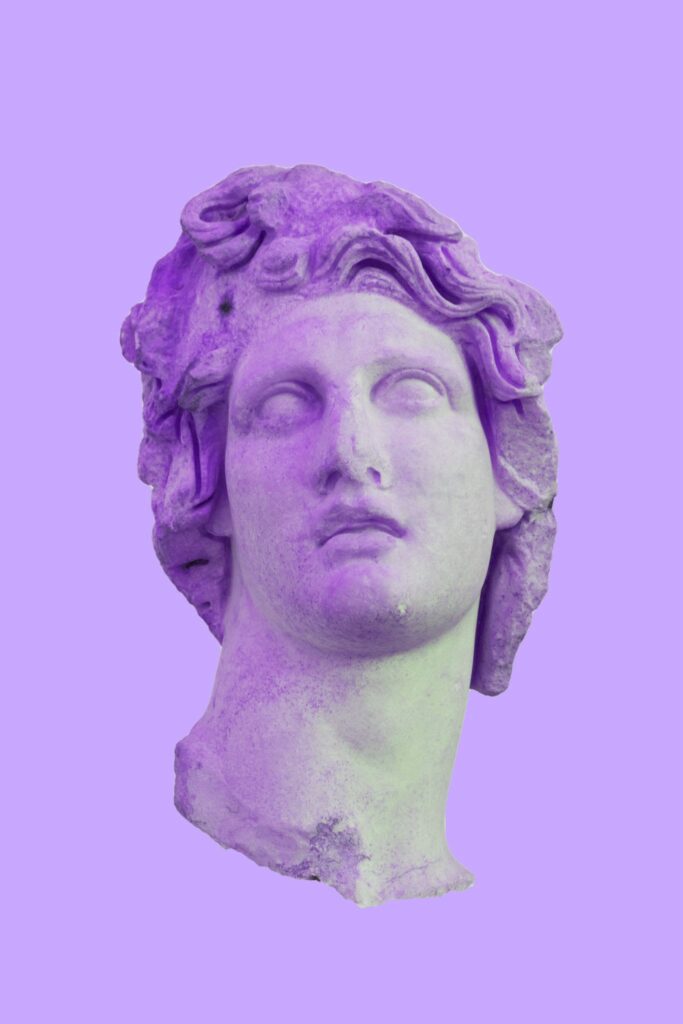
In a world of cheap, automated perfection, the ancient practice of “suffering well” is the new luxury good.
I remember the exact moment the panic hit me.
I was sitting in a coffee shop, staring at my laptop screen, watching a beta version of a new Large Language Model (LLM) churn out an essay in seconds. It was on a topic I had spent the last ten years mastering. The prose was clean. The structure was sound. It wasn’t perfect, but it was fast and terrifyingly confident.
For a brief moment, the ground dissolved beneath me. The “I” that I had constructed—the writer, the thinker, the creator—suddenly felt obsolete.
The data suggests I am not alone in this feeling. A recent report by Goldman Sachs implies AI could expose the equivalent of 300 million full-time jobs to automation. The American Psychological Association reports that “fear of technology” is now a leading driver of existential stress in the workforce.
We are all waiting for the other shoe to drop. We are obsessively asking, “Can AI do what I do?”
The answer is yes. Eventually, it will do almost everything you do.
But the Stoic question—the only one that actually matters—is different:
“Can AI be who I am?”
Can an algorithm practice virtue? Can a neural network feel the crushing weight of failure and choose to stand up anyway? Can a machine suffer well?
The answer is no. And in an economy flooding with cheap competence, your ability to endure, to feel, and to struggle is no longer a bug. It is your ultimate feature.
The Empire of the Algorithm vs. The Citadel of the Self
If Marcus Aurelius were transported to Silicon Valley today, seated in a Herman Miller chair and shown the capabilities of GPT-4, he wouldn’t be impressed by the efficiency. He certainly wouldn’t be anxious about the singularity.
He would likely laugh. Not a mocking laugh, but a knowing one.
Marcus wrote Meditations inside a freezing tent on the Danube frontier, surrounded by war, plague, and betrayal. He was the most powerful man on earth, yet he was writing notes to himself about how to remain good in a world that tempted him to be bad.
He understood a fundamental distinction that modern tech evangelists miss: the difference between Technê (technical skill/craft) and Phronesis (practical wisdom).
AI possesses infinite Technê. It can code, write, and calculate faster than any human. But it possesses zero Phronesis.
“Information is not wisdom. Knowledge is not understanding.”
Wisdom is not the accumulation of data. If it were, the internet would be a sage. Wisdom is the scar tissue formed by making mistakes. It is the byproduct of feeling the pain of those mistakes and enduring the consequences.
ChatGPT cannot hesitate. There is no doubt. It cannot experience the “Dark Night of the Soul.” It creates a simulation of confidence, but it has never had to be brave.
The Science of “Desirable Difficulties”
I have lived this distinction. Years ago, I went through a professional failure that nearly broke me. I lost a business I had poured my soul into.
If I had fed the parameters of that business failure into an AI, it would have given me a clinically correct post-mortem. It would have listed the market factors, the cash flow errors, and the timing issues. It would have been “correct.”
But it would have been useless.
The value of that failure wasn’t the data analysis. The value was the nights I spent staring at the ceiling, wrestling with my own ego. The value was learning how to detach my self-worth from my net worth.
Cognitive psychologists actually have a term for this: “Desirable Difficulties.”
Coined by researcher Robert Bjork, the term refers to learning tasks that require considerable effort. These difficulties trigger cognitive processes that improve long-term retention and the ability to transfer skills to new situations.
AI removes friction. It is designed to make things easy, fast, and seamless. Stoicism teaches us that friction is necessary.
As Seneca, the Stoic statesman, wrote to Lucilius:
“No man is more unhappy than he who never faces adversity. For he is not permitted to prove himself.”
When we use AI to bypass the “hard part”—writer’s block, awkward drafting, difficult conversations—we are not just saving time. We are robbing ourselves of the gym session for our character. We are creating what modern philosopher Nassim Taleb calls “fragility.”
If you let a machine do all your heavy lifting, you don’t just get the job done faster; you atrophy the muscles required to carry your own life.
Humanity as the New “Veblen Good”
So, where does this leave us in the job market?
Here is my contrarian bet: As AI drives the cost of “competence” down to zero, the value of “humanity” will skyrocket.
In economics, a Veblen Good is a luxury item for which demand increases as the price increases, because of its exclusive nature and status appeal (think: a rare mechanical watch vs. a cheap digital one).
We are about to witness a massive flight to quality. But “quality” won’t mean “perfect grammar” or “photorealistic lighting.” Machines have that covered.
Quality will mean “proof of human struggle.”
Consider the “IKEA Effect”—a cognitive bias where people place a disproportionately high value on products they partially created themselves. We value sweat equity. We value the human touch precisely because it is inefficient.
We are moving toward an artisan economy of the soul.
-
AI is the factory. It provides average, competent work at scale.
-
You are the artisan. You provide nuance, empathy, weirdness, and the ability to navigate moral complexity.
The ability to look a client, a patient, or a friend in the eye and say, “I know you’re scared, I’ve been there, and I’ve got you,” requires biological empathy. It requires the shared experience of mortality.
An AI can predict the word “sorry.” It cannot feel regret.
3 Ways to Practice “Stoic Resistance.”
I am not suggesting you become a Luddite. I use AI tools every day. But I use them as a Stoic uses a sword: with a firm hand, ensuring I am the master, not the servant.
Here is how you make this real in your life—three recommendations for staying relevant, sane, and human.
1. Seek “Skin in the Game” (The Taleb Rule)
Nassim Taleb argues that you cannot trust a system (or a person) that does not share the downside risk of their decisions.
“If you do not take risks for your opinion, you are nothing.” — Nassim Taleb
AI has no skin in the game. It cannot be fired. It cannot lose a friend. It cannot die. Therefore, it cannot truly lead.
Recommendation: Focus on developing high-stakes skills. Conflict resolution, strategic risk-taking, and deep mentorship are areas where the data is incomplete, and the consequences are personal. Stop trying to be a better calculator than the computer. Be a better risk-taker.
2. Reclaim Your Cognitive Resistance
When I write, I refuse to let an LLM draft the first version. That blank page is my dojo. That struggle to find the right word is where my brain makes new connections (neuroplasticity).
If I outsource the draft, I am outsourcing the thinking.
Recommendation: Use AI for execution, never for conception. If the work requires moral judgment, emotional nuance, or original insight, keep your hands on the wheel. The struggle is the point.
3. Practice Askesis (Voluntary Discomfort)
This is a classic Stoic technique. If technology is making life easier, you must artificially reintroduce difficulty to maintain your edge.
Recommendation: Take a cold shower. Leave your phone at home and walk in the woods. Have the difficult conversation in person, not over text. Read a dense, difficult book instead of a summary.
Remind yourself that you are a creature designed for struggle. Your ability to endure discomfort is your competitive advantage over a machine that requires a perfect temperature-controlled server room to function.
The Last Sanctuary
Marcus Aurelius didn’t have ChatGPT, but he had slaves, scribes, and advisors. He could have easily outsourced his thinking. He could have asked a scribe to “write me something inspiring about death.”
He didn’t. He sat with the candle and the parchment and did the work himself.
Why? Because he knew that the writing wasn’t for an audience. It was for him. It was the gymnasium where he built his soul.
The anxiety you feel about AI is real, but it is misplaced. Do not fear that you will be replaced. Fear that you will allow yourself to become so comfortable, so automated, and so frictionless that you forget how to suffer well.
The algorithm can replicate your syntax. It can mimic your style. It can steal your voice.
But it can never replicate your resilience. It can never replicate the quiet dignity of a human being facing the unknown and choosing to step forward anyway.
That is your monopoly. Guard it.
A Question for the Reader
I want to hear from you: What is one “difficult” task in your work or life that you refuse to outsource to AI, precisely because the struggle makes you better? Let me know in the comments


