


I used to wear burnout like a badge of honor. I mistook motion for progress, trapped in the “Mere Urgency Effect” — addicted to urgent, trivial tasks while ignoring the important ones.
Here is how I finally stopped doing more and started doing better.
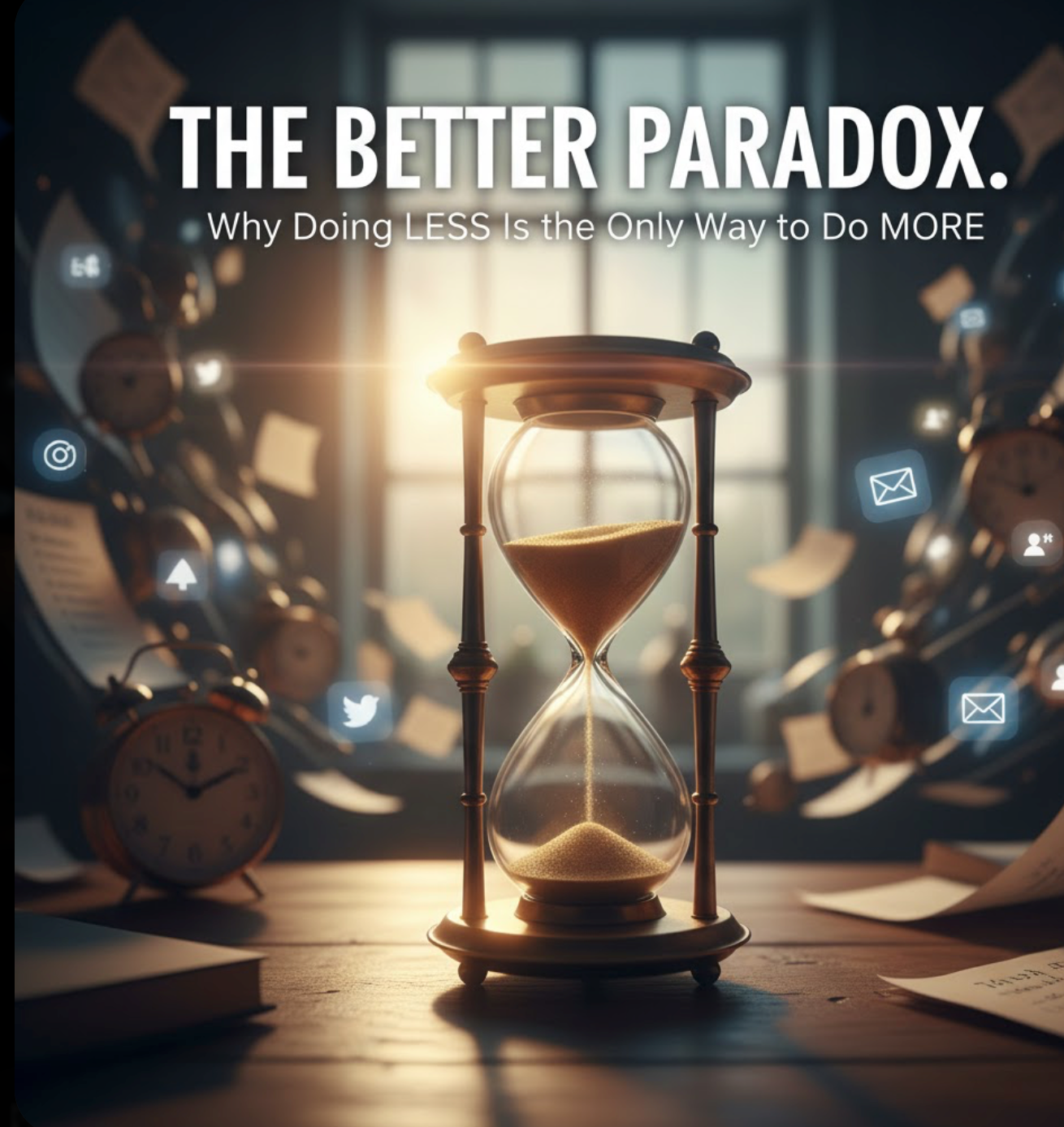
The Cost of Fake Productivity
I wasted 10,000 hours being productive. Every single one of them.
That’s not hyperbole. If you count the years I spent responding to emails nobody read, shuffling paperwork, and checking tasks off lists that didn’t move the needle, it’s closer to 12,000 hours. Five hundred full days of my life, gone.
I remember the exact moment I realized my life strategy was broken.
It was a Tuesday, late in the afternoon. The sun was cutting through the blinds, casting long shadows across a desk cluttered with “urgent” papers. My eyes were burning, my coffee cup was empty, and my to-do list was a graveyard of crossed-out items.
I had replied to thirty emails. I had “touched base,” “circled back,” and put out three minor fires that had ignited in my text messages. I was vibrating with frantic energy.
By all traditional metrics, I had crushed the day. I was exhausted, which I had been trained to believe was a proxy for productivity. But as I closed my laptop, a sinking feeling settled in my chest. A hollow ache that felt suspiciously like failure.
If you had asked me what I actually accomplished that moved my life forward, I wouldn’t have been able to answer. I had spent eight hours spinning in circles.
The Lie We’ve Been Sold
We live in a world that glorifies the grind. We treat our lack of sleep as a status symbol and compete over who is more stressed. But there is a hard truth I had to accept — one that I now share with every client I coach:
Busyness is not the same thing as effectiveness.
James Clear, the author of Atomic Habits, summarized the antidote to this modern sickness in a single sentence that stopped me cold:
“Doing better things drives better results.”
Read that again. It doesn’t say more things. It says better things.
The shift from quantity to quality is a radical act of rebellion against a world demanding your constant attention. I could tell you the numbers, but the real transformation was internal: I stopped waking up with dread and started waking up with purpose.
Why Your Brain Keeps Choosing the Wrong Things
We are not just undisciplined. We are fighting our own biology.
Researchers call it the Mere Urgency Effect. A study published in the Journal of Consumer Research found that when people are faced with two tasks — one that is urgent but trivial, and one that is important but not urgent — we almost instinctively choose the urgent one.
Our brains crave the dopamine hit of finishing a task. Clearing an inbox feels good. It tells our primitive brain: “Good job. You survived another threat.”
“Better things,” however, are rarely urgent.
Writing a book, deepening a relationship, or resting so you can recover — these tasks don’t scream for your attention. They sit quietly in the background, waiting for you to choose them. And because they are often complex and lack an immediate reward, we ignore them.
Here’s the metaphor that finally made it click for me:
- Urgent tasks are like slot machines: Immediate feedback, minimal reward.
- Essential tasks are like compound interest: Tedious to watch, transformative over time.
I realized I was an addict. I was addicted to the low-value, high-frequency hum of daily maintenance. As Peter Drucker famously said: “There is nothing so useless as doing efficiently that which should not be done at all.”
I had to break the addiction.
The “Better-Not-More” Protocol
After months of trial and error, I developed the Better-Not-More Protocol. It is built on three simple pillars that fight against everything the hustler brain wants to do.
Pillar 1: The Input Audit
We often view productivity as an output problem. But your output is merely a reflection of what you feed your mind. Garbage in, garbage out.
You cannot produce deep, strategic work when your brain is operating in a shallow, distracted state. I began to treat my attention like a high-security facility.
- Instead of: Scrolling social media for “news.”
- Try: Reading one chapter of a biography about a leader you admire
- Instead of: Listening to a podcast at 2x speed to finish it.
- Try: Sitting in silence for 15 minutes to process your own thoughts.
When you change your inputs, you change your outcomes.
Pillar 2: Default Design
Willpower is a finite resource. By 5:00 PM, your brain is toast. I knew that if I relied on willpower to choose “better things,” I would fail.
So, I stopped making decisions and started building defaults.
- The Morning Block: My first 90 minutes are sacred. No email, no phone. Just my most important task. This is a default, not a choice.
- The Digital Sunset: My phone automatically goes into “Do Not Disturb” at 8:00 PM. I don’t have to “decide” to get off my phone; the decision is made for me.
- The Daily Question: Before I open a new tab, I ask: “Is this moving the needle, or is it just noise?”
Pillar 3: The 2-Minute Daily Audit
You cannot improve what you do not measure. For years, I measured volume. Now, I measure impact.
At the end of each day, I take exactly 120 seconds to look at my list and ask a hauntingly simple question:
“Did I do better things today, or just more things?”
This reflection creates awareness. You will realize that being “busy” is often a form of laziness — lazy thinking and indiscriminate action.
The Withdrawal Symptoms
Three weeks into the Protocol, I panicked.
My inbox hit 100 unread emails. People — friends, acquaintances, peers — were waiting on me. I felt the weight of “unresponsiveness.” The old voice in my head screamed: You’re being lazy. Get back on the hamster wheel.
I nearly abandoned everything to go back to the grind. But then I looked at what I had actually accomplished in those quiet three weeks:
- I finished a strategic plan I had been working on for six months without success.
- I had two deep conversations with colleagues at Meals on Wheels that were way overdue.
- I finished my first book, The Magic of a Moment.
This is where the fear kicks in. When you start choosing “better,” you will feel a pang of guilt. You will feel lazy because you aren’t running around with your hair on fire.
Making the shift required me to become comfortable with disappointing people. It meant leaving emails unread for 24 hours so I could finish a project. It meant trading the immediate gratification of being “liked” for the long-term satisfaction of being effective.
The Courage to Abandon “Good Enough”
The most insidious enemy of the “better thing” is the “good thing.”
It is easy to turn down a project that pays nothing. It isn’t easy to turn down a good opportunity to make room for a great one.
I used to accept surface-level coffee chats because I didn’t want to be rude, which robbed me of the time to have deep conversations with close friends. I would write five mediocre blog posts for “content,” rather than sweating over one essay that might actually change someone’s mind.
We don’t need to hustle harder. We need to pause, look at the chaos of our calendars, and have the courage to cut away everything that isn’t essential.
Your Test
Here’s your test: Tomorrow, before you open your email or check the news, spend 90 minutes on the one thing you’ve been avoiding because it’s hard.
If you can’t do it, you don’t have a time problem. You have a courage problem.
Ignore the urgent to focus on the important. Read one great chapter instead of ten clickbait headlines. Have one real conversation instead of twenty text exchanges.
Do better things.


